
How NAD+ Declines During Menopause – and Why It Matters for Energy, Mood, and Aging
If you're going through menopause and feel like your energy has completely vanished, your brain is wrapped in fog, and your body just isn't bouncing back like it used to, you're definitely not imagining things. There's actually some fascinating science behind what's happening inside your cells, and it all comes down to a tiny but mighty molecule called NAD+.
Let's break this down in a way that actually makes sense, because understanding what's going on in your body is the first step toward feeling like yourself again.
Supporting NAD+ levels during and after menopause is important for energy, mental clarity, and healthy aging.
So, What Exactly Is NAD+?
NAD+ stands for Nicotinamide Adenine Dinucleotide, quite the mouthful, right? But don't let the fancy name intimidate you. Think of NAD+ as the fuel that keeps your cells running smoothly.
Here's what NAD+ does for your body:
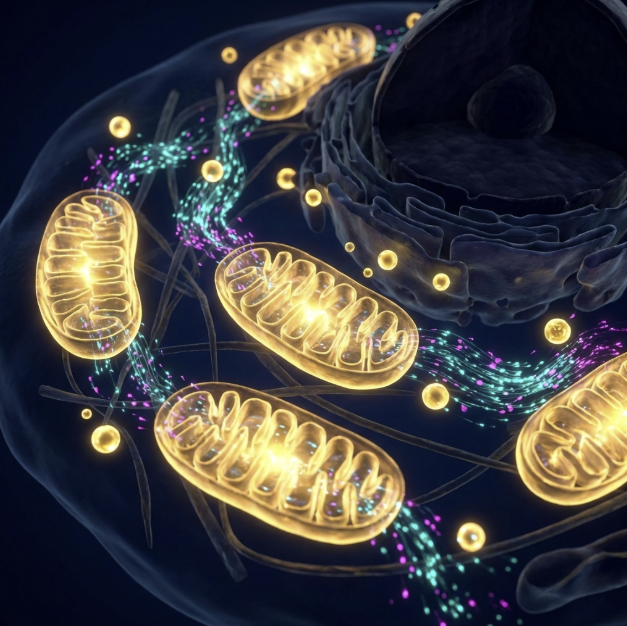
Powers cellular energy production – NAD+ is essential for your mitochondria (the "powerhouses" of your cells) to create the energy you need to get through your day
Supports healthy metabolism – It helps your body convert food into usable energy efficiently
Promotes longevity and cellular repair – NAD+ activates special proteins called sirtuins that help repair DNA damage and keep your cells young and healthy
Regulates your internal clock – It plays a role in circadian rhythm, which affects your sleep quality
Without enough NAD+, your cells struggle to function properly. And here's the thing, NAD+ levels naturally decline as we age. By middle age, most people have lost about 50% of their NAD+. But for women going through menopause? That decline kicks into overdrive.
The Menopause-Estrogen-NAD+ Connection
Here's where it gets really interesting. Estrogen actually helps maintain your NAD+ levels. It supports NAD+ production and keeps your mitochondria functioning at their best.
So when estrogen takes a nosedive during menopause (as it does), your NAD+ levels follow right behind. It's like a domino effect happening inside your cells.
But wait, it gets even more dramatic. Research shows that NAD+ depletes in the ovaries roughly 2.5 times faster than in the rest of the body during menopause. That's a significant drop happening in a relatively short period of time.
Why does this happen?
An enzyme called CD38 becomes more active as we age, and it basically gobbles up NAD+. When estrogen drops during menopause, it loses its regulatory control over NAD+ production, which means CD38 has free rein to deplete your reserves even faster.
Add in the inflammation and oxidative stress that come with hormonal shifts, and you've got a perfect storm for rapidly declining NAD+ levels.
How Declining NAD+ Shows Up in Your Daily Life
Okay, so NAD+ is dropping. But what does that actually feel like? Chances are, you're already experiencing some of these symptoms:
Crushing Fatigue
Remember when you could power through your day without needing three cups of coffee and a nap? When NAD+ levels drop, your cells literally can't produce enough energy to keep up with your demands. It's not laziness or lack of willpower: your cellular energy factories are running on empty.
This is why so many women in menopause describe feeling exhausted, no matter how much sleep they get. The energy production is happening at a cellular level, and without adequate NAD+, your cells just can't keep up.

Brain Fog and Cognitive Slowdown
Walking into a room and forgetting why you're there. Struggling to find the right words. Feeling like your brain is wading through molasses.
Sound familiar?
NAD+ decline directly impacts brain function. Your neurons need energy to fire properly, and when NAD+ is low, cognitive processes slow down. The combination of hormonal changes and reduced NAD+ also impairs your body's ability to manage oxidative stress, which can damage brain cells over time.
Mood Swings and Emotional Rollercoasters
The mood disturbances that come with menopause aren't just about hormones: they're connected to NAD+ too. When your cells are stressed and struggling to function, it affects neurotransmitter production and emotional regulation.
Sleep Disturbances
NAD+ helps regulate your circadian rhythm, so when levels drop, your sleep-wake cycle can get thrown completely off. Poor sleep then creates a vicious cycle, making fatigue and brain fog even worse.
Accelerated Aging
Here's the part nobody wants to hear: declining NAD+ speeds up the aging process. When NAD+ drops, so does the activity of sirtuins: those proteins responsible for DNA repair and cellular maintenance. Without them working efficiently, damaged cells accumulate faster, oxidative stress increases, and biological aging accelerates.
The hormonal changes of menopause compound this effect, increasing risks for osteoporosis, cardiovascular issues, and metabolic concerns.
The Inflammation and Oxidative Stress Factor
Let's talk about two troublemakers that make everything worse: inflammation and oxidative stress.
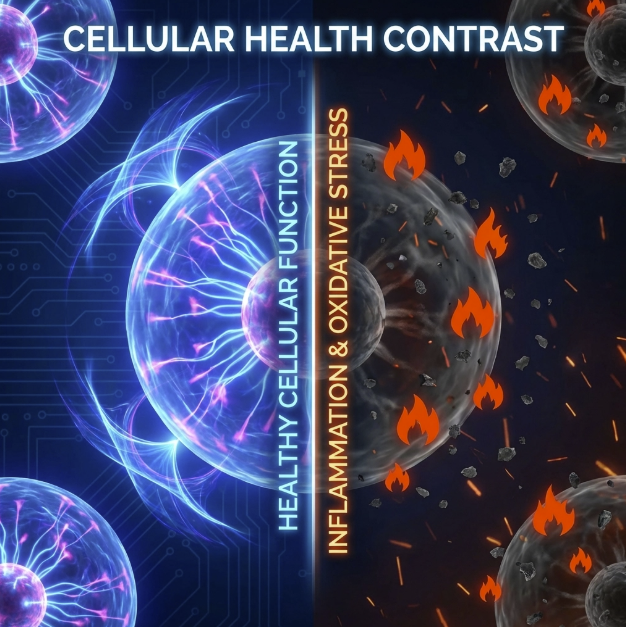
During menopause, your body experiences increased cellular inflammation and oxidative stress (basically, an accumulation of harmful molecules called reactive oxygen species). These two factors:
Further deplete your already-low NAD+ reserves
Worsen common menopause symptoms like hot flashes and joint pain
Accelerate cellular damage and aging
Create a cycle that's hard to break without intervention
It's like your cells are fighting a battle on multiple fronts, and they're running out of ammunition.
Supporting Your Cellular Health During Menopause
The good news? Understanding what's happening in your body gives you the power to do something about it. Supporting your cellular health during menopause isn't just about managing symptoms: it's about giving your cells what they need to thrive.
Here are some strategies to consider:
Prioritize Nutrient Support
Your body needs the right building blocks to support NAD+ production and cellular function. B vitamins, antioxidants like N-acetylcysteine (NAC), and other key nutrients play important roles. Learn more about the benefits of powerful antioxidants in supporting your wellness routine.
Consider IV Therapy
When it comes to delivering nutrients directly to your cells, IV therapy in Odessa, TX, offers a direct route that bypasses digestive absorption issues. Many women find that IV hydration in Odessa, TX helps them feel more energized and mentally sharp, especially during the menopausal transition.
IV therapy can deliver vitamins, minerals, and hydration directly into your bloodstream, supporting cellular function when your body needs it most.
Focus on Lifestyle Factors
Regular exercise supports mitochondrial health and can help maintain NAD+ levels
Quality sleep gives your cells time to repair and regenerate
Stress management helps reduce inflammation and oxidative stress
A nutrient-dense diet provides the raw materials your cells need
Work with Wellness Professionals
Every woman's menopause journey is different. Working with professionals who understand the cellular changes happening in your body can help you create a personalized approach to feeling your best.
You Don't Have to Just "Push Through"
Here's something important to remember: the fatigue, brain fog, and accelerated aging you're experiencing during menopause aren't things you just have to accept. There's real science behind why you feel the way you do, and there are real solutions available.
Understanding the NAD+-estrogen connection is empowering because it shifts the conversation from "something's wrong with me" to "my cells need support right now."
Whether you're just entering perimenopause or you're years into your menopausal journey, it's never too late to start supporting your cellular health. Your cells are working hard for you: they just need a little help.
Ready to explore how IV therapy and wellness support can help you feel more like yourself? Book an appointment with us at Enliven, or reach out with questions. We're here to help you navigate this chapter with energy, clarity, and confidence.