
Beat the West Texas Heat: Keep Your Crew Hydrated, Safe, and Productive
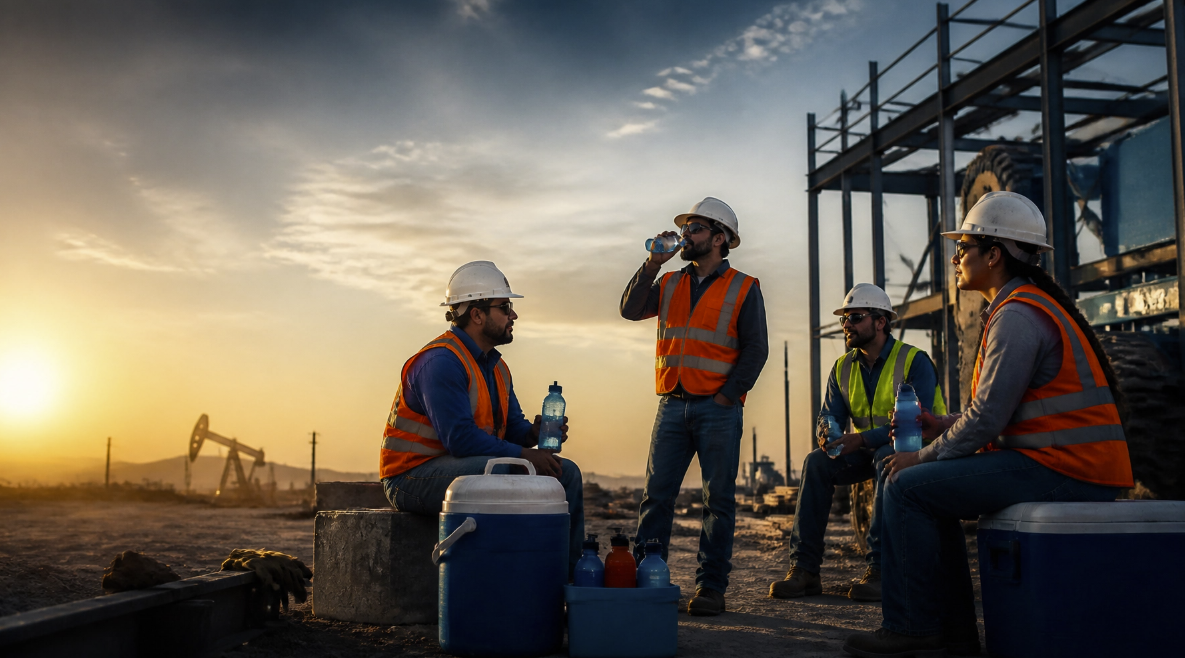
West Texas summers do not ease up for a construction schedule.
From Odessa and Midland to job sites across the Permian Basin, crews work long hours around concrete, steel, heavy equipment, and direct sun. Add high temperatures, protective gear, and physically demanding tasks, and dehydration can become a serious safety risk: not just an inconvenience.
For construction company owners, project managers, and site foremen, a strong hydration plan can help protect your people, reduce heat-related downtime, and keep the job moving.
It is also important to address another common problem: workers arriving depleted after a night out or trying to labor through a hangover. A hangover can involve headache, nausea, dizziness, fatigue, and dehydration: symptoms that can become even more dangerous in extreme heat.
Here is how to help your crew stay safer, sharper, and better prepared for the West Texas heat.
Why Heat Is a Serious Construction Risk
Heat illness can develop quickly, especially during long shifts and strenuous work. A worker may begin the day feeling fine and then experience symptoms after hours of sweating.
Common heat-related conditions include:
Dehydration
Heat cramps
Heat exhaustion
Heat stroke
Heat exhaustion can cause heavy sweating, weakness, headache, dizziness, nausea, and muscle cramps. If it progresses to confusion, fainting, seizures, slurred speech, or unusual behavior, it may be heat stroke: a life-threatening emergency.
According to OSHA heat-exposure guidance, employers should provide water, rest, shade, training, and procedures for recognizing and responding to heat illness. The CDC and NIOSH also provide construction-specific heat-safety guidance.
The key message for every crew is simple: Do not wait until someone collapses to take heat seriously.
Water Helps, but Heavy Sweating Can Change the Equation
Water is the foundation of a safe hydration plan. Workers should drink before they feel thirsty and continue drinking throughout the shift.
A common OSHA and NIOSH recommendation is approximately:
8 ounces of cool water every 15–20 minutes
More frequent access during strenuous work or extreme heat
Regular breaks in a shaded or cooled area
For moderate work lasting less than two hours, water may be enough for many workers. However, prolonged, heavy sweating can also reduce electrolytes such as sodium, potassium, and magnesium.
That is why workers performing intense outdoor labor for several hours may benefit from balanced electrolyte drinks in addition to water. Electrolytes help support normal muscle, nerve, and fluid function, but they are not a substitute for rest, shade, medical evaluation, or an appropriate heat-illness prevention plan.
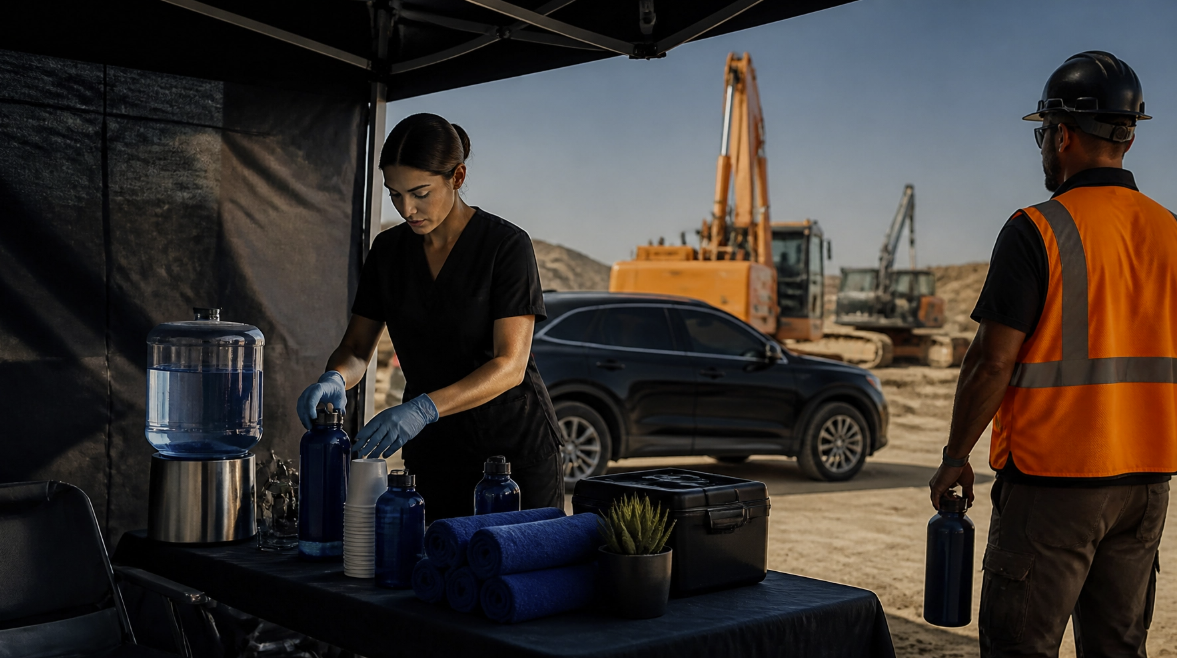
A practical job-site hydration station may include:
Cool drinking water placed near the work area
Electrolyte beverages for extended, heavy-sweat shifts
Ice, cooling towels, and shaded seating
Clearly scheduled hydration and rest breaks
A buddy system for watching early warning signs
A plan for calling emergency services
Workers should also avoid alcohol before a hot shift. Alcohol can contribute to dehydration and impaired judgment: two risks that do not mix with ladders, cranes, power tools, driving, or heavy equipment.
The Early Warning Signs Your Crew Should Know
Every worker and supervisor should know what heat exhaustion looks like. Early action can prevent a more serious emergency.
Watch for:
Headache
Dizziness or lightheadedness
Unusual fatigue or weakness
Heavy sweating
Muscle cramps
Nausea or vomiting
Dark-colored urine
Irritability or difficulty concentrating
If a worker reports these symptoms, take them seriously.
What to Do
Stop the work.
Move the worker to shade or an air-conditioned area.
Remove unnecessary outer clothing or equipment.
Cool the worker with fans, cool towels, or ice packs.
Offer small amounts of cool water if the person is awake and able to swallow safely.
Do not leave the worker alone.
Seek medical attention if symptoms continue, worsen, or include confusion or fainting.
Confusion, loss of consciousness, seizures, slurred speech, or unusual behavior may indicate heat stroke. Call 911 immediately and begin cooling the worker while emergency responders are on the way. Do not give fluids to someone who is unconscious or unable to swallow safely.
IV hydration is not a treatment for heat stroke. Emergencies require immediate emergency medical care.
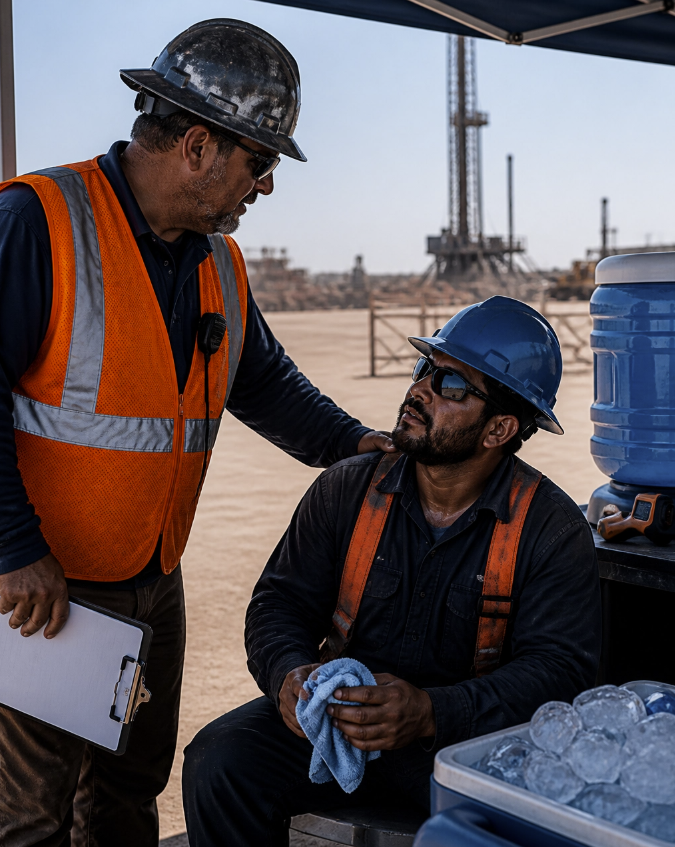
Hangovers and Hot Job Sites: A Risky Combination
A Friday night or Saturday celebration may seem far removed from Monday morning, but its effects can carry into the next shift.
Someone dealing with a hangover may already be experiencing:
Dehydration
Headache
Nausea
Weakness
Poor sleep
Sensitivity to light or heat
Trouble focusing
Slower reaction time
Those symptoms can become more serious when combined with direct sun, high temperatures, physical labor, and safety-sensitive equipment.
A worker who is still impaired by alcohol, severely ill, confused, or unable to safely perform their duties should not work. Hydration support cannot make an impaired person fit for duty, and no wellness service should be used as a replacement for a company’s safety policy or supervisor judgment.
However, for an adult who is no longer intoxicated but is dealing with the dehydration, headache, nausea, or fatigue associated with a hangover, professional hydration support may be a convenient recovery option.
How Enliven Can Support Your Crew
Enliven provides IV hydration and wellness services for busy West Texas professionals, including construction workers and company teams.
Our services help support recovery by providing fluids, electrolytes, and selected vitamins under professional supervision. Depending on a client’s needs and medical screening, options may include:
IV hydration with electrolyte support for rehydration after heavy sweating
Hangover recovery drips for adults experiencing common hangover symptoms
Immune boost shots for additional wellness support
NAD+ services for clients seeking energy and cellular wellness support
The goal is not to push workers through unsafe conditions. The goal is to help eligible clients support their wellness and recovery so they can return to normal activities responsibly.
Every client should be evaluated individually. IV therapy and injections are not appropriate for everyone, and results vary. Our team can discuss the available options, health history, medications, and safety considerations before treatment.
Looking for IV hydration in Odessa, TX, IV therapy in Odessa, TX, or a hydration IV in Midland, TX? Come on in!
Onsite Hydration Support for Construction Companies
Getting an entire crew off-site can be difficult when deadlines are tight. Enliven may also be able to coordinate concierge or mobile wellness services for eligible groups and job sites.
An onsite service can help companies create a more convenient wellness option for:
Large construction crews
Oil and gas teams
Weekend or overtime crews
Project managers and executives
Company wellness events
Workers recovering after extended outdoor assignments
Onsite availability, group size, scheduling, and medical requirements should be discussed in advance. A dedicated shaded, clean, and private area is needed for any mobile service.
For companies that value discretion, Enliven can discuss private arrangements and convenient scheduling. The focus is simple: help your team access professional hydration support without adding unnecessary travel time.
A Simple Three-Step Plan for Your Company
Step 1: Build hydration into the shift
Do not treat hydration as something workers handle only when they feel thirsty. Place cool water where crews can easily access it, schedule rest breaks, and provide electrolyte options for prolonged heavy-sweat work.
Step 2: Train supervisors to recognize symptoms
Foremen should know the difference between ordinary tiredness and a potential heat illness. Encourage workers to speak up early. A headache or muscle cramp can be a warning sign: not something to ignore.
Step 3: Create a recovery and referral plan
Decide ahead of time what happens when someone arrives dehydrated, sick, or recovering from a hangover. Supervisors should follow company fitness-for-duty policies, remove impaired workers from safety-sensitive tasks, and know when to contact emergency services.
For non-emergency wellness support, companies can contact Enliven about individual appointments, group coordination, or mobile service availability.
Help Keep Your Job Site Moving Safely
The West Texas heat is part of doing business, but heat-related illness does not have to be treated as inevitable.
A thoughtful plan that combines water, electrolytes when appropriate, shade, rest, training, and early intervention can help your crew stay safer and more productive. Addressing hangover-related dehydration responsibly can also help prevent workers from trying to power through symptoms that may put themselves and others at risk.
Enliven is here to support eligible adults with professional hydration and wellness services in Odessa, Midland, and surrounding areas.
Enliven
3800 E. 42nd St., Suite 205
Odessa, TX 79762
Call or text:1-833-IV-ME-NOW
That’s: 1-833-486-3669
Walk-ins: Monday–Friday, 9 a.m.–6 p.m.
For questions about appointments, services, or onsite options, visit our contact page or review our frequently asked questions.
Come on in, or reach out to discuss a hydration plan that fits your crew and your schedule!